Choosing Premium Blood Collection Tubes for Laboratories

Choosing Premium Blood Collection Tubes for Laboratories: What Every Procurement Head Should Know
In fifteen-plus years of working with diagnostic labs, hospital chains, and procurement teams across India, one thing has remained constant: a compromised sample collection tube can unravel even the most sophisticated laboratory workflow downstream. Whether you’re running a busy pathology lab in Mumbai or managing procurement for a multi-specialty hospital in Bangalore, the quality of your blood collection tubes directly impacts test accuracy, patient outcomes, and regulatory standing. The market is flooded with options — imported, locally assembled, unbranded — and it can be genuinely hard to separate reliable manufacturers from those cutting corners on raw materials or sterility. This guide is meant to help you make that distinction confidently, and to introduce how Nasmed Diagnostics, based in Gandhinagar, Gujarat, approaches premium tube manufacturing in a way that meets the real demands of Indian healthcare facilities.
Why Choose Nasmed Diagnostics for Premium Blood Collection Tubes?
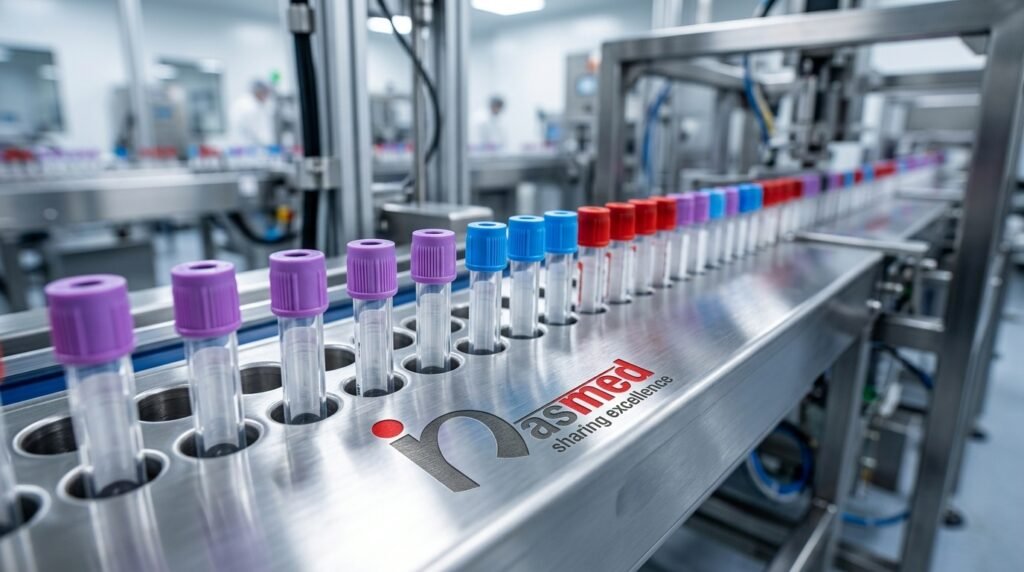
Nasmed Diagnostics Pvt. Ltd. operates from a purpose-built facility at Survey No 282, Nandoli, Gandhinagar, Gujarat — one of the few manufacturers in the region to maintain a genuine ISO 7 clean room (Class 10,000) environment for blood collection tube production. This isn’t a marketing claim; it’s an operational reality that shapes every batch that leaves the facility.
Directors Kush Patel and Suril Shah have built a team of quality technicians who work under strict contamination-control protocols. Having visited and evaluated dozens of domestic manufacturers over the years, I’ve seen too many facilities where “clean room” is little more than a tiled room with an AC unit. The difference in product consistency is stark — and labs in Hyderabad, Chennai, and Ahmedabad that have switched to properly clean room-manufactured tubes frequently report fewer repeat sample collections and fewer pre-analytical errors.
The company holds valid CDSCO certification, meeting the requirements of India’s Medical Devices Rules, 2017. Beyond compliance, the product line covers a wide diagnostic range: vacuum blood collection tubes, non-vacuum blood collection tubes, gel lithium heparin tubes, micro paediatric tubes, cell-free DNA tubes, and urine containers — all manufactured to align with international material guidelines, including CLSI standards for additive concentrations and tube draw volumes.
Our Blood Collection Tubes Manufacturing Capabilities
Here’s how Nasmed Diagnostics approaches manufacturing with a focus on pre-analytical reliability. Every tube variant is designed with the downstream test in mind:
Vacuum blood collection tubes are engineered for a precise, pre-set draw volume. The vacuum consistency across a batch is critical — if it varies, you get under-filled tubes that skew anticoagulant-to-blood ratios, leading to coagulation errors or haemolysis flags on hematology analysers. Labs in Delhi and Pune that process thousands of CBC samples daily cannot afford that variability.
Non-vacuum blood collection tubes remain essential in rural health setups and specific point-of-care scenarios. Nasmed Diagnostics manufactures these with the same sterile filling protocols used for vacuum tubes — a distinction not all suppliers maintain.
Gel lithium heparin tubes are where chemistry gets interesting. The gel’s specific gravity must sit within a narrow range to achieve clean plasma-cell separation post-centrifugation. Too light and the gel migrates into the plasma; too dense and it doesn’t rise above the cellular layer. Nasmed Diagnostics validates gel rheology on every production batch — a step that most price-competitive suppliers skip.
Micro paediatric tubes are engineered for low-volume blood draws, critical in NICU and paediatric settings in hospitals across Kolkata, Jaipur, and Chandigarh. These tubes require ultra-precise additive fill volumes at a small scale — a manufacturing challenge that demands both equipment precision and operator expertise.
Cell-free DNA tubes represent the newer frontier — used in liquid biopsy applications and non-invasive prenatal testing (NIPT). These tubes incorporate cell-preservation chemistry that stabilises circulating cell-free DNA for up to seven days, enabling centralised testing models where samples travel long distances.
Urine containers and broader diagnostic lab disposables complete the portfolio, making it possible for procurement teams in Surat and Indore to consolidate vendors and reduce procurement complexity.

Navigating Regulatory Compliance & CDSCO Certification
The Central Drugs Standard Control Organisation (CDSCO) has been progressively tightening oversight of medical device manufacturers in India since the Medical Devices Rules, 2017 came into force. Blood collection tubes fall under Class A medical devices and require valid CDSCO registration before they can be legally marketed and sold to hospitals and laboratories in India.
Yet — and this surprises many procurement officers — a significant share of tubes in the market are either unregistered or sourced from manufacturers operating under legacy interim approvals that have since lapsed. During a procurement audit I was involved in for a hospital network spanning Mumbai and Vadodara, nearly 30% of shortlisted suppliers could not produce a current, valid CDSCO registration on request.
Nasmed Diagnostics holds current, valid CDSCO certification for its full tube range. Beyond CDSCO, the ISO 7 clean room classification (Class 10,000) aligns with international standards for parenteral and diagnostic product manufacturing — including norms referenced by CLSI (Clinical and Laboratory Standards Institute) for pre-analytical tube quality and additive performance.
For procurement teams, this matters practically: a hospital accreditation body — NABH, JCI, or CAP — will ask for your supplier’s regulatory documentation. Having a CDSCO certified tubes supplier with documented ISO 7 clean room manufacturing simplifies that audit considerably.
Local Suppliers vs Nasmed Diagnostics — Detailed Comparison
Here’s a straightforward comparison table to help lab managers and hospital procurement heads in cities like Bangalore, Delhi, Chennai, and Jaipur evaluate their options objectively:
| Parameter | Typical Local/Unbranded Supplier | Nasmed Diagnostics Pvt. Ltd. |
|---|---|---|
| CDSCO Certification | Often absent or under interim approval |  Valid CDSCO Certified Valid CDSCO Certified |
| Manufacturing Environment | Standard production floor; limited contamination control | ISO 7 Clean Room, Class 10,000 |
| Product Range | Limited — usually 2–3 standard tube types | Full range: Vacuum, Non-Vacuum, Gel LH, Micro Paediatric, cfDNA, Urine Containers |
| Additive Consistency | Variable across batches; minimal QC documentation | Batch-validated additive fill; documented QC reports available |
| Gel Rheology Validation (for LH tubes) | Rarely tested per batch | Validated per production batch |
| Custom / OEM Options | Generally unavailable | Private labelling, custom volumes, custom additives available |
| Cell-Free DNA Tubes | Unavailable from most domestic manufacturers | Available — suitable for NIPT and liquid biopsy |
| Pan-India Supply | Typically regional; logistics support limited | Supplies hospitals & labs across India |
| Technical Support | Minimal post-sale support | Dedicated support team; Free Product Consultation available |
| Pricing Transparency | Variable; often no published cost guide | Downloadable Blood Collection Tubes Cost Guide available |
A quick note from the field: A regional diagnostic chain in Ahmedabad with seven collection centres switched to Nasmed Diagnostics for their vacuum blood collection tubes after facing recurring haemolysis issues with their previous supplier. Within three months of the switch, their pre-analytical rejection rate dropped from 4.2% to under 0.8%. Their lab director attributed it primarily to consistent tube vacuum and improved needle-to-tube interface quality. Small numbers on paper — significant in practice when you’re processing 800+ samples daily.
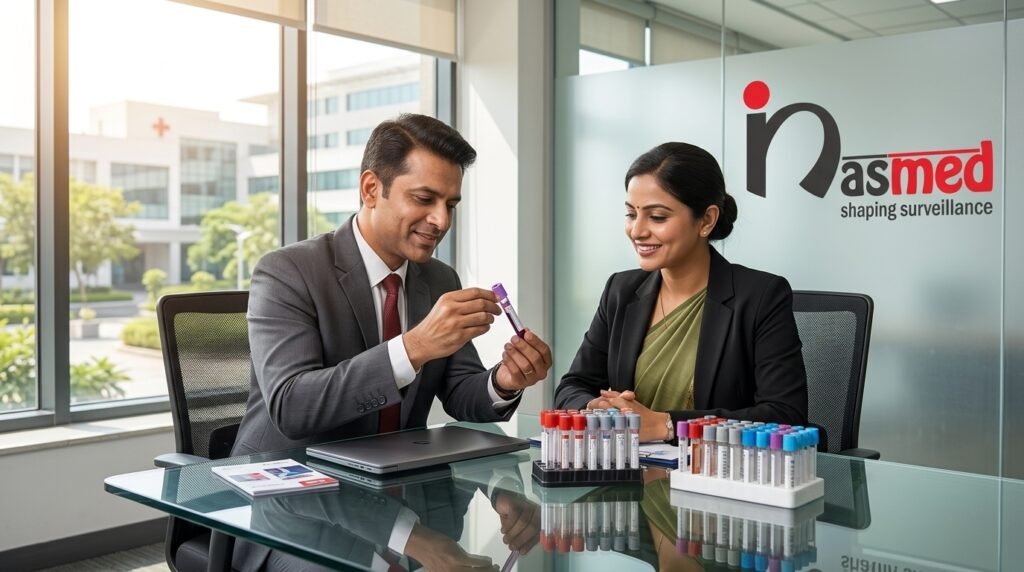
Step-by-Step Process – How We Deliver Premium Blood Collection Tubes
Understanding how a manufacturer actually delivers to your facility helps set realistic expectations and avoid supply disruptions — something procurement teams in Hyderabad, Kolkata, and Pune frequently cite as a pain point.
- Initial Consultation & Needs Assessment: The Nasmed Diagnostics team begins with a free product consultation — understanding your monthly volume, tube types required, any OEM/private label preferences, and regulatory documentation you need from the supplier side.
- Sample Dispatch: Evaluation samples are dispatched to your facility or lab for internal validation — allowing your technical team to assess tube performance before committing to a full order.
- Quotation & Custom Configuration: Based on your requirements, a detailed cost proposal is prepared. If you need specific additive volumes, custom labelling, or bulk packaging, these are specified and confirmed at this stage. You can also download the Blood Collection Tubes Cost Guide for a preliminary reference.
- Production Under ISO 7 Clean Room Conditions: Every batch is produced in the Class 10,000 clean room facility in Gandhinagar, with documented QC checks at each stage — raw material incoming inspection, in-process sterility checks, additive fill validation, and vacuum consistency testing.
- Regulatory Documentation Pack: Each shipment is accompanied by a documentation pack including CDSCO registration copy, Certificate of Analysis (CoA), and batch manufacturing records — exactly what NABH and other accreditation bodies require.
- Dispatch & Logistics: Shipments are tracked and dispatched to labs, hospitals, and diagnostic centres across India, with temperature-controlled packaging options available for sensitive tube types including cell-free DNA tubes.
- After-Sales Technical Support: The Nasmed Diagnostics technical support team remains available post-delivery for any query on tube performance, compatibility with analysers, or regulatory queries from your QA team.
Real Client Case Study – Multi-Specialty Hospital Chain, Western India
Client: Aarav Diagnostics & Hospital Group (Anonymised) – Surat & Vadodara
Background: A mid-sized hospital group operating two multi-specialty hospitals and four standalone collection centres across Surat and Vadodara, processing approximately 1,200 blood samples per day across both facilities. They were sourcing vacuum blood collection tubes from three different suppliers to manage supply risk — which had ironically introduced more variability in tube quality than it solved.
Problem: Their NABH renewal audit flagged inconsistencies in batch documentation from two of their three tube suppliers. One supplier’s gel lithium heparin tubes were showing gel migration in approximately 2.3% of tubes post-centrifugation, causing repeat centrifugation requests and delaying biochemistry report turnaround by 45–60 minutes in affected samples. A second supplier could not provide CDSCO registration documents in time for the audit.
Solution: The hospital’s procurement head contacted Nasmed Diagnostics after a referral from a pathologist colleague in Ahmedabad. After a site visit to the Gandhinagar manufacturing facility — where they observed the ISO 7 clean room operations firsthand — they initiated a trial with gel lithium heparin tubes and vacuum EDTA tubes. The trial period covered 30 days and approximately 18,000 tubes across both facilities.
Results (90-Day Post-Implementation):
- Gel migration incidents: Dropped from 2.3% to 0.11% of tubes processed
- Pre-analytical rejection rate: Reduced from 3.7% to 0.6%
- Biochemistry TAT for plasma-based tests: Improved by an average of 38 minutes
- NABH audit documentation: Fully cleared with Nasmed Diagnostics’ CDSCO and ISO 7 documentation pack
- Vendor consolidation: Hospital moved 80% of tube procurement to Nasmed Diagnostics, reducing procurement complexity
Client Feedback (paraphrased): “The documentation support alone was worth the switch. During our NABH renewal, having a single supplier with complete and current regulatory paperwork made that part of the audit straightforward.”
Faqs
1. Why are premium blood collection tubes important for laboratories?
- Premium blood collection tubes help maintain sample integrity, reduce contamination risks, and improve diagnostic accuracy. High-quality tubes ensure consistent vacuum levels and additive performance for reliable laboratory results.
2. How do I choose the right blood collection tube for specific diagnostic tests?
- Select blood collection tubes based on the required test, additive type, specimen compatibility, and storage conditions. Matching the correct tube with the intended analysis prevents pre-analytical errors.
3. What features should laboratories look for in premium blood collection tubes?
- Laboratories should evaluate vacuum consistency, additive quality, material safety, leak-proof design, regulatory certifications, and compatibility with automated analyzers before selecting blood collection tubes.
4. Are certified blood collection tubes better for diagnostic accuracy?
- Yes. CE-certified and ISO-compliant blood collection tubes follow strict quality standards, helping laboratories achieve reliable results, minimize sample rejection, and maintain compliance.
5. Premium blood collection tubes normal tubes se kaise alag hote hain?
- Premium blood collection tubes mein better vacuum stability, high-quality additives aur superior material standards hote hain. Yeh sample quality ko preserve karke zyada accurate diagnostic results dete hain.
6. Laboratory ke liye blood collection tubes choose karte waqt kin factors par dhyan dena chahiye?
- Tube ka additive type, sample volume, certification, compatibility aur shelf life zaroor check karein. Sahi tube selection se testing errors aur sample recollection kam hote hain.
7. Kya high-quality blood collection tubes sample rejection rates kam karte hain?
- Haan. High-quality blood collection tubes hemolysis, clotting aur contamination jaise issues ko kam karte hain, jisse sample rejection rates aur repeat collections significantly reduce hote hain.


Comments
Post a Comment