Serum-Separating Tube: Uses, Tests & Blood Collection Guide
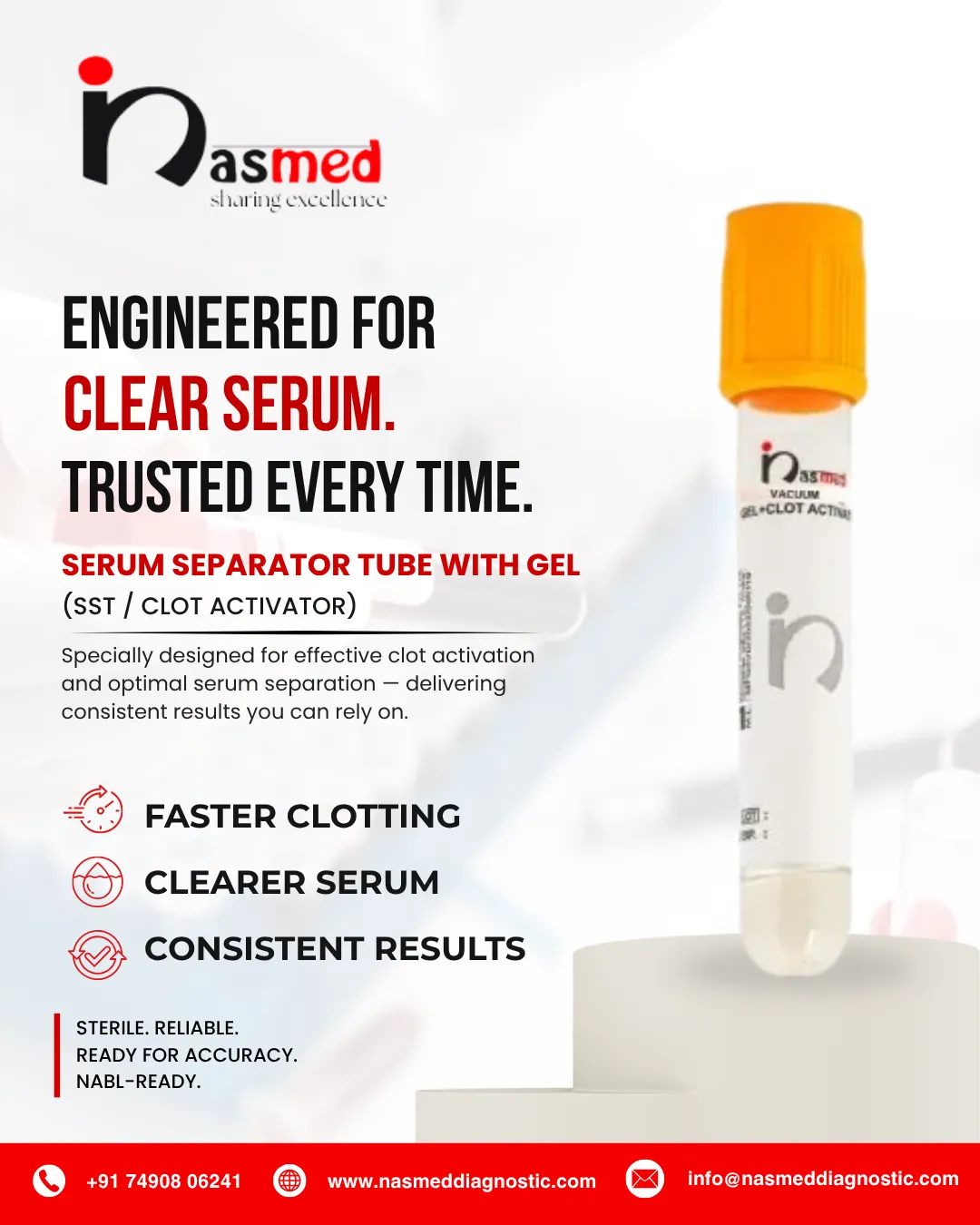
A serum separator tube (SST) is one of the most used blood collection tubes in any clinical laboratory. It contains a clot activator and a thin layer of separator gel, and together they turn a blood draw into clean, usable serum. If you work in a lab, hospital or phlebotomy team, knowing how this tube behaves saves time and prevents rejected samples.
An SST is a sterile, vacuum-sealed tube designed to produce serum, the clear, straw-coloured liquid left after blood clots and the cells are removed. Most clinical chemistry tests run on serum.
Inside the tube you will find:
- A clot activator, usually micronised silica, which speeds up clotting.
- A polymer separator gel at the bottom, which forms a barrier after centrifugation.
Other names and cap colours
The same tube is also called an SST tube, gold top tube or tiger top tube. Caps are typically gold or red-and-grey marbled. Colour coding can differ slightly between manufacturers, so always read the label and the instructions for use.
Why it matters clinically
A treatment decision often depends on a single lab value. If cells stay in contact with serum, glucose falls and potassium rises, so the result can mislead. The gel barrier keeps serum away from cells and keeps the sample closer to the patient's true condition. For a wider view of tube families, see this overview of types of blood collection tubes.
How Does a Serum Separator Tube Work?
The process has three stages: clotting, spinning and separating.
- Clotting. Blood enters the tube and meets the clot activator. Labs usually allow about 30 to 60 minutes at room temperature, depending on the manufacturer's instructions.
- Centrifugation. The clotted tube goes into a centrifuge. A common setting is 1,000 to 1,300 RCF for around 10 minutes. Always follow the tube insert.
- Separation. Under spinning force the gel thins and moves up. Its density sits between blood cells and serum, so it settles between them, then thickens again when the spin stops.
The result is three clear layers:
| Layer (top to bottom) | What it contains |
|---|---|
| Top | Clear serum, ready for analysis |
| Middle | Gel barrier |
| Bottom | Clot with blood cells |
What Is the Gel Inside an SST?
The separator gel is an inert, thixotropic polymer. Thixotropic simply means it flows when spun or stirred and firms up when left still.
Why gel density matters
Manufacturers make the gel heavier than serum but lighter than clotted cells. That balance lets it rise to the boundary between the two layers. If the density is off, the barrier forms poorly and serum can mix with cells again.
What the gel should not do
Good gel does not react with common analytes and does not release particles into serum. Still, some substances, such as certain therapeutic drugs, can partly absorb into the gel. That is why a few tests need a plain tube instead.
Clot activator options
Most SSTs use silica particles. Some rapid serum variants use thrombin, which clots blood faster. This helps in urgent settings or for patients on anticoagulant therapy.
Common Tests Done with an SST
Labs prefer SSTs for routine chemistry because the serum is ready for automated analysers after one spin.
| Test category | Examples |
|---|---|
| Metabolic panels | Basic and comprehensive metabolic panel (BMP, CMP) |
| Lipid studies | Total cholesterol, HDL, LDL, triglycerides |
| Liver function | ALT, AST, ALP, bilirubin |
| Kidney function | Urea, creatinine |
| Hormones and markers | Thyroid profile, cardiac markers |
| Serology | Many immunology and infectious disease assays |
Tests that may need a different tube
Some assays are sensitive to gel. Therapeutic drug monitoring, toxicology screens and certain specialised hormone tests often call for a plain or non-gel tube. Your laboratory's test directory has the final word. A wrong tube can force a redraw, so this reference on which tube to use for which test is useful to keep handy.
SST vs Red Top Tube
Both tubes give serum, but they get there differently.
| Feature | SST (gold / tiger top) | Red top tube |
|---|---|---|
| Separator gel | Yes, forms a barrier | No gel |
| Clot activator | Yes, usually silica | Varies; plain glass has none, plastic often has it |
| Serum removal | Serum sits above gel, less risk of cell contact | Serum must be carefully transferred off the clot |
| Processing speed | Faster and more consistent | Slower, more manual handling |
| Serum volume | Slightly less, as gel takes space | Slightly more |
| Analyte interference | Some drugs and hormones may adsorb into gel | No gel interference |
| Best for | Routine chemistry and serology | Gel-sensitive tests and special assays |
How to decide
Start with your test menu. If the assay needs a gel-free specimen, use a red top. If it is routine chemistry, an SST usually saves time and reduces handling errors. Never swap one for the other without checking the test requirements.
How to Collect Blood Using an SST
Good technique protects the sample before it reaches the lab. The WHO guidelines on drawing blood describe safe phlebotomy principles, and these steps fit within them.
- Prepare. Verify patient identity, gather supplies and pick the right SST. Check the expiry date and confirm the tube is intact.
- Draw. Follow the correct order of draw for your protocol. Let the tube fill to its stated volume to keep the blood-to-activator ratio right.
- Mix. Gently invert five to six times. Do not shake, since vigorous mixing can cause haemolysis.
- Label. Label at the bedside right after collection with patient details, date and time.
- Clot. Keep the tube upright at room temperature for the recommended time. Skipping this can leave fibrin strands in the serum.
- Centrifuge. Balance the tube opposite another of equal weight and spin per manufacturer settings.
- Inspect. Look for a firm gel layer with clear serum above it. Cloudy, red or fibrin-streaked serum needs investigation.
- Aliquot or store. If needed, move serum to a labelled secondary tube without touching the gel, then test, refrigerate or freeze as required.
Common mistakes to avoid
- Spinning before the clot has fully formed
- Under-filling the tube
- Re-centrifuging a tube after serum has been removed
- Keeping an unspun tube for too long
Advantages, Limitations and Handling Tips
Advantages
- Faster processing, since separation happens inside the tube
- Cleaner serum with less manual transfer
- Lower risk of cell contamination
- Works smoothly with automated analysers
- Serum can stay stable on the gel for a period, depending on the analyte
Limitations
- Not ideal for gel-sensitive assays
- Slightly higher unit cost than plain tubes
- Depends on correct clot time and centrifuge settings
- Slightly lower serum yield
Handling tips that protect results
Keep tubes upright, avoid extreme temperatures and process within the time your lab specifies. In hot climates, transport conditions matter as much as tube quality. Some tests, such as glucose, use a different additive tube. For example, sodium fluoride blood collection tubes exist for exactly that reason.
Choosing Reliable SST Tubes for Your Lab
Even perfect technique cannot rescue a poor-quality tube. Consistent gel, accurate vacuum and clean manufacturing directly affect results.
Nasmed Diagnostics Pvt. Ltd. is a CDSCO-certified manufacturer based in Nandoli, Gandhinagar, Gujarat. Its blood collection tubes are made in an ISO 7 clean room facility (Class 10,000). The range includes vacuum and non-vacuum tubes, micro/paediatric tubes, cell-free DNA tubes, gel lithium heparin tubes and urine containers, supplied to hospitals, clinics and labs across India.
Phone: +91 79908 01393
WhatsApp: +91 74908 06241
Email: info@nasmeddiagnostic.com
Address: Survey No 282 (Old Block No 213 Paiki), Nandoli, Gandhinagar, Gujarat 382115
Browse the full range of blood collection tubes or read the original SST guide on the Nasmed Diagnostics website.
Frequently Asked Questions About SST Tubes
1. What is a serum separator tube used for?
It collects blood and gives clean serum for chemistry, hormone and serology tests after clotting and centrifugation.
2. What colour is an SST cap?
Usually gold or red-and-grey marbled (tiger top). Always confirm on the manufacturer's label.
3. How long should blood clot in an SST?
Typically 30 to 60 minutes at room temperature, but follow the instructions for your specific tube.
4. What is the gel inside an SST made of?
An inert, thixotropic polymer with a density between serum and blood cells.
5. Can I use an SST instead of a red top tube?
Only if the test allows it. Gel can interfere with some assays, so check your lab's requirements.
6. How many times should I invert an SST?
Gently invert five to six times right after collection to mix the clot activator.
7. What speed and time should I use to centrifuge an SST?
Commonly 1,000 to 1,300 RCF for about 10 minutes. Always follow the tube insert.
8. Which tests should avoid SST tubes?
Some drug level, toxicology and specialised hormone tests may need gel-free tubes.
This guide is for general education. Always follow your laboratory's SOPs and the manufacturer's instructions for use.


Comments
Post a Comment